
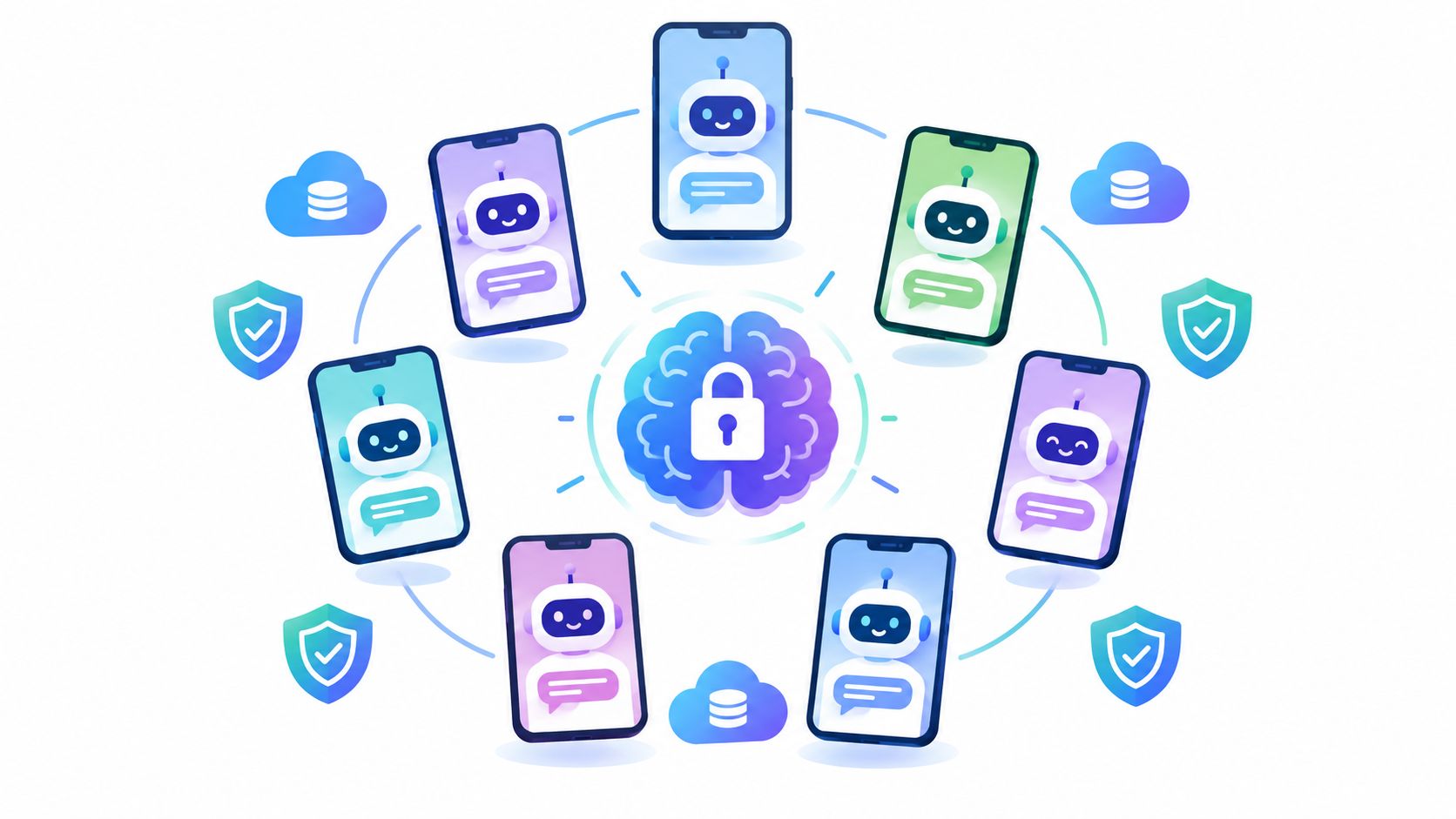
Most advice about an ai conversation app starts in the wrong place. People compare character counts, voice modes, or how “human” the replies feel, then they hand over personal chats and hope for the best. The better question is simpler and more useful. Where does the persona's memory come from, can you inspect it, and can you delete it?
That matters because a persona generates replies in someone's style, but it is not the person and can't contact anyone. Only use conversations you have the right to use, and if you're building anything memorial or grief-adjacent, keep it empathetic and remember that AI is not a substitute for grief support or therapy. For the basics on consent and control, see consent and likeness and data controls. I'm ranking these seven apps by memory provenance, persona controls, consent handling, deletion, and mobile experience, not by hype.
Table of Contents
- 1. ExChat
- 2. Replika
- 3. Poe by Quora
- 4. Pi
- 6. Kindroid
- 6. Nomi
- 6 AI Conversation Apps: Side-by-Side Comparison
- Choose the App That Matches Your Consent Limits
1. ExChat
ExChat is the pick that treats memory as something you can audit rather than something you have to trust blindly. It is built for private, clearly labeled personas from material you are allowed to use, including messages, memories, photos, and relationship context. That matters if you want continuity after a breakup, a memorial chat that stays respectful, or a personal digital twin for drafting and practice. Its website also makes the AI label visible, which is the right move for any app handling realistic human context. ExChat keeps the line clear between a style model and a real person.
Why it stands out
The biggest advantage is provenance. Replies can point back to the source, whether that source is an imported message, an added memory, or model inference, so you are not left guessing where a response came from. That makes it easier to correct one memory without wiping everything else, which is the kind of control these apps often skip. Consent rules matter too. If you are shaping a realistic living-person persona, explicit permission should be part of the workflow, not an afterthought.
Practical rule: if you cannot see where a memory came from, you cannot really trust the reply that uses it.
ExChat's text message AI guide follows the same approach. The app also supports WhatsApp, Telegram, and Instagram DM exports, plus a Persona Builder that asks you to review and approve before the first message goes out. That is the right pattern for personal chat history. It lets you test tone, trim risky sources, and keep the persona recognizable without pretending it is the original person.
What works and what doesn't
Works well
Visible AI labeling: every conversation is clearly marked as AI, which helps avoid accidental impersonation.
Granular memory control: you can inspect, correct, pause, export, or delete provided materials and derived memories.
Consent-aware design: it pushes users to stay inside conversations they have the right to use.
Mobile-first flow: the app is built for on-the-go creation and chat.
Doesn't solve everything
Accuracy still depends on your sources. If the imported material is messy, the persona will be messy.
It can't become the actual person. It can only generate replies in their style, which is the safer and more honest framing.
Pricing details aren't published yet. The site points to a pricing section, but final plan details and limits are not public.
For people comparing personal AI tools with privacy in mind, ExChat is the safest fit on this list for personal chat history because the controls are the point, not an afterthought.
2. Replika
Replika is a mature companion app, and it shows. It leans into one-to-one relationships, avatar customization, and different conversation modes instead of trying to be everything at once. If you want a steady companion with cross-device sync and a long-running product history, it's one of the more established options.
The app supports web, iOS, and Android, and it syncs across devices. That matters more than people admit, because these apps get used in small moments throughout the day, not just in long sessions. Replika also offers voice calls, casual chat, coaching prompts, and roleplay, which gives it a broader emotional range than a plain chatbot.
What I like less is how much of the experience sits behind tiered features and cosmetic upgrades. The in-app store and paid gates are part of the package, so you need to check what's included before you commit. Plan names and pricing can also vary by platform and region, which makes comparison shopping annoying.
If you're choosing by trust and memory handling, Replika sits in the middle. It's good at companionship and routine use, but it's not the app I'd choose for highly sensitive chat history that needs source-level inspection or strict deletion workflows. It's better when the goal is a stable, ongoing companion persona rather than a tightly audited archive.
Best use case and limits
Replika works best for people who want a companion that feels established and available on multiple devices. It's also a reasonable pick if you care more about ongoing interaction than about building from imported chat logs.
It's not ideal if you need explicit consent workflows, provenance labels, or a clear memory audit trail. Those controls matter more when the persona is tied to a real relationship history.
3. Poe by Quora
Poe is less a single app than a conversation hub. It lets you switch between many models and community bots without juggling a pile of separate products. That makes it useful if you compare tone, style, and response quality across different systems in one place. It's a breadth-first tool, which is a real advantage for testing.
The platform includes dozens of hosted models and media generators in one interface, with mobile and web apps plus creator tools. There's also a single subscription path for premium access, along with optional add-on points for heavier use. For people who want assistant, coding, creative, and persona-style chats in one place, that structure is convenient.
The downside is predictability. Pricing and plan details can render differently across web and app, and the point system adds another layer of friction. Poe is easiest to like when you already know how you'll use it and you're comfortable switching among bots.
It's not the best match for personal chat-history personas, because its core strength is model variety, not memory provenance. If your main question is “Can I inspect and delete exactly what a persona remembers?”, other apps are more focused on that problem. Poe is better when you want to compare different conversational styles before you settle on one.
4. Pi
Pi takes a softer approach than most of the category. It's built around supportive, emotionally intelligent conversation, quick check-ins, and light planning. The tone is calm, which is a real feature if you don't want a flashy or performative assistant. Some people prefer that immediately.
The app offers voice conversations as well as text, and it's available on iOS, Android, and the web with simple onboarding. That lowers the barrier to trying it. There's also a help center with guides and feedback, which suggests the product is designed for everyday use rather than just novelty.
What Pi does not prioritize is custom persona building. If you want to shape a persona from your own chat history, this is not the strongest pick. It's closer to a supportive conversational companion than a memory-heavy clone or archive-based tool.
The big advantage is ease. There's no obvious consumer paywall in the referenced setup, so it's easy to test without a lot of friction. The trade-off is that the feature set is narrower, and you'll get fewer knobs for building and auditing a specific persona. If your priority is a simple, gentle AI that talks well and doesn't get in your way, Pi makes sense. If you need control over source memories and consent boundaries, it doesn't go far enough.
6. Kindroid
Kindroid is for people who want a richer, more media-heavy companion experience. It goes beyond plain text with voice notes, live video calls, and image generation tied to the conversation. That makes it feel more active than a simple chat app, especially if you care about a companion that can stay expressive across formats.
The app also emphasizes persistent memory, which is a big deal for continuity. In companion tools, the difference between “it remembers the vibe” and “it remembers the specifics” changes the entire product experience. Kindroid leans into the latter, which will appeal to users who want a more detailed running history.
The trade-offs are practical. App-store pricing can be higher than web pricing because of store fees, so it's smart to compare before subscribing. Android availability has also fluctuated in some regions, which is annoying if you're not on iPhone. That makes it a bit less predictable than the cleaner mobile-first options.
This is a good fit for users who value a rich interface over strict source provenance. It feels more alive than a bare chatbot, but that also means you need to stay careful about what you feed it. If you're using personal relationships or memorial material, the same consent rules still apply, and you should keep an eye on what's remembered versus what's inferred.
6. Nomi
Nomi is memory-first in a way that makes sense immediately. It emphasizes short-, medium-, and long-term continuity, plus text and voice chat across web and mobile. That gives it a stronger sense of ongoing relationship than apps that reset too much between sessions. If you care about tone staying consistent over weeks or months, that's the right instinct.
It's geared toward companionship use cases like friend, romantic, and mentor roles. That means the product is designed around continuity, not just one-off conversation. For some users, that's exactly what they want. They want a shared history that doesn't feel like it disappears every time they open the app.
The problem is access can shift. Google Play availability has changed at times, so regional availability isn't something I'd treat as fixed. Exact in-app prices can also vary by region and may change, so you should confirm at checkout rather than relying on old screenshots or forum posts.
Nomi sits near the top for memory continuity, but not necessarily for consent transparency. It's strong when the goal is an ongoing companion persona. It's less convincing when you're trying to manage imported relationship history with the same rigor you'd want for source labels, deletion, and likeness safeguards.
6 AI Conversation Apps: Side-by-Side Comparison
| Product | 🔄 Implementation complexity | ⚡ Resource requirements | ⭐ Expected outcomes | 📊 Ideal use cases | 💡 Key advantages |
|---|---|---|---|---|---|
| ExChat | High, persona builder, source-review workflow, connectors | Moderate, mobile app + secure storage for labeled memories | Traceable, persona-style replies with source links; still can hallucinate ⭐ | Consent-aware memorials, breakup continuity, private personal twins | Privacy/consent-first design; editable long-term memory and in-chat source inspection |
| Replika | Low, mature, polished companion product | Moderate, cross-device sync and paid feature backend | Consistent companion experience; richer with paid tiers ⭐ | One-to-one companion, coaching, roleplay, emotional practice | Established product, avatar customization, multiple conversation modes |
| Poe (by Quora) | Medium, aggregator UI but manages many models under the hood | Moderate–high, hosts multiple models; subscription/credits options | Broad capabilities across assistant, coding, creative tasks ⭐ | Users needing model variety and switching (coding, creative, assistant) | Single interface to try many models; creator tools and subscription tiers |
| Pi (Inflection AI) | Low, simple onboarding, empathy-first design | Low, consumer-friendly access; minimal visible paywall | Supportive, emotionally intelligent replies; limited persona controls ⭐ | Everyday emotional support, light planning, quick check‑ins | Gentle, steady conversational tone; easy to try without paywall |
| Kindroid | Medium–high, multimedia (voice, selfies, live video) and memory features | High, media streaming, image generation, persistent storage needs | Rich, expressive interactions with persistent memory ⭐ | Users wanting vivid multimedia companions and expressive memory | Strong multimedia experience (voice, selfies, live video) and detail-oriented memory |
| Nomi | Medium, memory-centric continuity and tone maintenance | Moderate, persistent memory storage, voice/text support | Durable continuity and consistent tone over time ⭐ | Long-term companionship where memory continuity matters | Memory-first design for weeks/months of continuity; simple upgrade flow |
Choose the App That Matches Your Consent Limits
The right ai conversation app is the one that matches your use case without asking you to hand over more context than you're comfortable with. If you want a casual companion, look for smooth mobile use and a tone you like. If you want to build from personal chat history, put memory provenance, editability, and deletion ahead of everything else. A persona should stay tied to conversations you have the right to use, and it should always be clearly labeled as AI.
That matters even more for memorial use. A tool can help you preserve stories, tone, and the shape of a relationship, but it can't bring someone back, and it shouldn't pretend to. It also shouldn't replace grief support or therapy. The safer products make that boundary obvious instead of hiding it behind a polished interface.
ExChat is the clearest fit if your priority is consent-aware continuity with visible AI labeling and real control over sources and memories. The creation flow is explained in how it works, and pricing details will matter more once they're published on pricing. Until then, judge any personal AI tool by a simple rule, can you inspect what shaped the reply, and can you remove it later if you need to?
If you want to create a persona from permitted material and keep the controls close, start with ExChat. Keep it private, keep it labeled, and keep the line between memory and identity clear.
ExChat is built for people who want private, clearly labeled personas from permitted chat history, with source labels and deletion controls that keep memory honest. If you're comparing an ai conversation app for personal context, memorial reflection, or a careful digital twin, ExChat is a practical place to start.
Create a private, clearly labeled AI persona from conversations you are allowed to use.
Create a persona ↗