
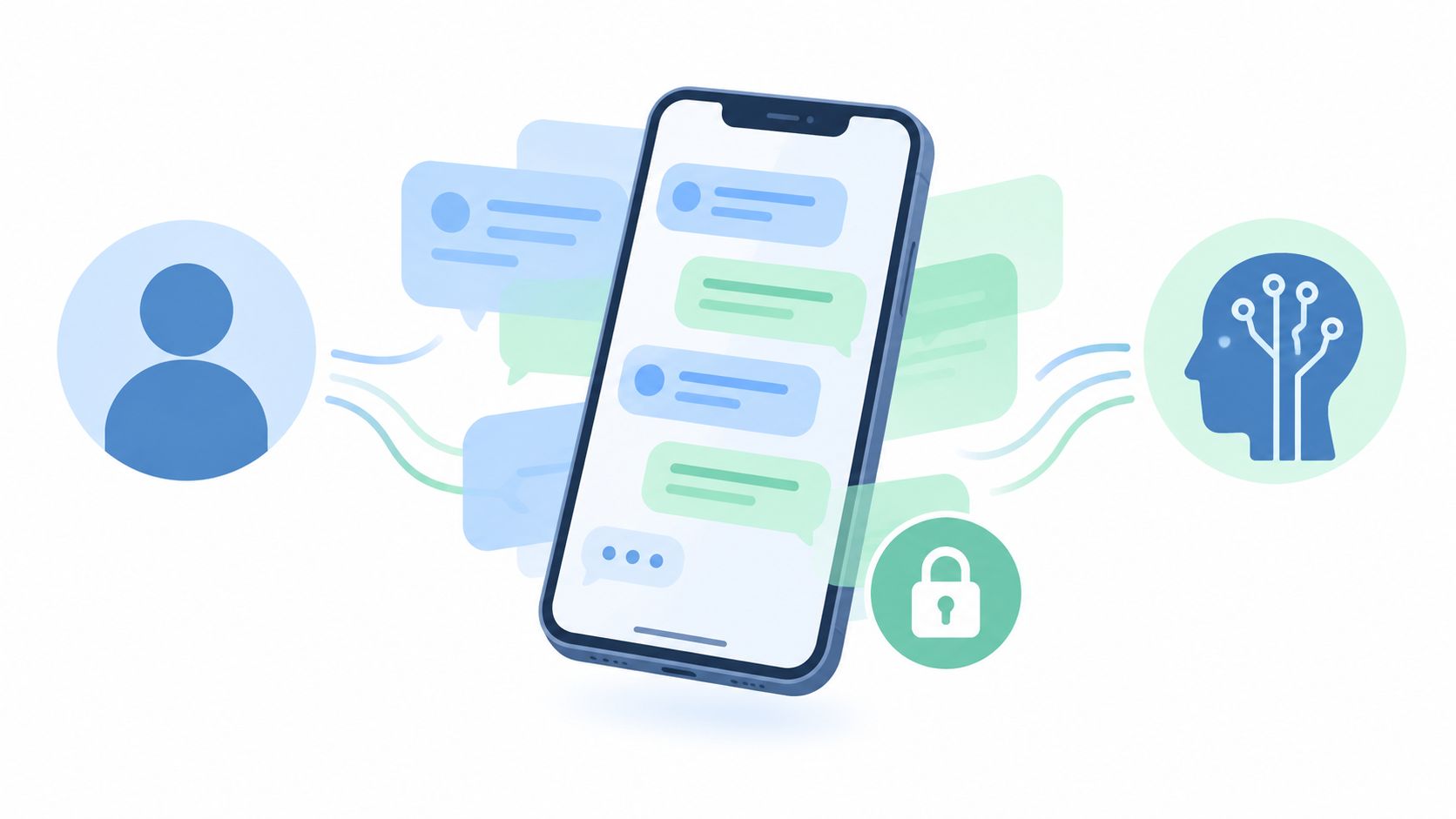
You're staring at an old chat export, rereading jokes, apologies, and ordinary updates that suddenly feel important. Maybe it's a conversation with an ex, a friend who moved away, or someone who died. A text message AI can help turn that archive into a structured conversation, but it can't restore a person or replace human connection. The trust question comes first: what data is used, what does the system infer, and can you remove it later?
Table of Contents
- What Text Message AI Actually Creates
- Preparing and Importing Your Chat Exports
- How Memory Architecture Shapes the Conversation
- The Privacy Case for Bounded and Inspectable Data
- Designing for Consent and Emotional Boundaries
- Understanding Your Right to Erasure and Control
- Common Questions About Text Message Personas
What Text Message AI Actually Creates
An old chat archive is more than a file. It can contain a person's habits, private worries, recurring jokes, names, locations, and details about people who never agreed to be part of an AI system. Uploading everything without review may feel convenient, but it removes your ability to decide what the resulting persona should know.
A text message AI creates generated replies shaped by permitted source material. It can identify patterns in wording, remember selected context, and produce a response that resembles the tone found in the archive. It doesn't become the person represented in the messages, possess their consciousness, or speak with their authority.

That distinction matters because conversational fluency can feel personal even when the system is following programmed rules. The early program ELIZA, developed by Joseph Weizenbaum at MIT between 1964 and 1966 and publicly described in January 1966, used keyword detection, pattern matching, substitution rules, and weighted keywords. Its DOCTOR script imitated a Rogerian psychotherapist, and Guinness World Records reports that the program contained about 200 lines of code. Some users still disclosed personal information and attributed empathy to its replies. This reaction became known as the ELIZA effect.
Reflection is different from impersonation
A structured digital reflection says, “This reply was generated from authorized messages and memories.” A deceptive impersonation suggests, “This is the actual person speaking.” Those are not the same experience, and a responsible product must make the difference visible.
ExChat creates private, clearly labeled AI personas from messages, memories, and relationship context the user is permitted to use. Personas remain labeled as AI, and users control and can delete uploaded data. That makes the product's role narrower and clearer: it generates replies in a familiar style without claiming real identity.
For a post-relationship conversation, that may mean reflecting on shared language without contacting the other person. For memorial use, it may provide a space to revisit authorized stories while acknowledging that the system is not the deceased person and isn't a substitute for grief support or therapy.
A short demonstration can make the distinction easier to understand:
The safest expectation is modest. You're not bringing someone back. You're creating a private, bounded interface for reflection, drafting, memory, or familiar conversation.
Preparing and Importing Your Chat Exports
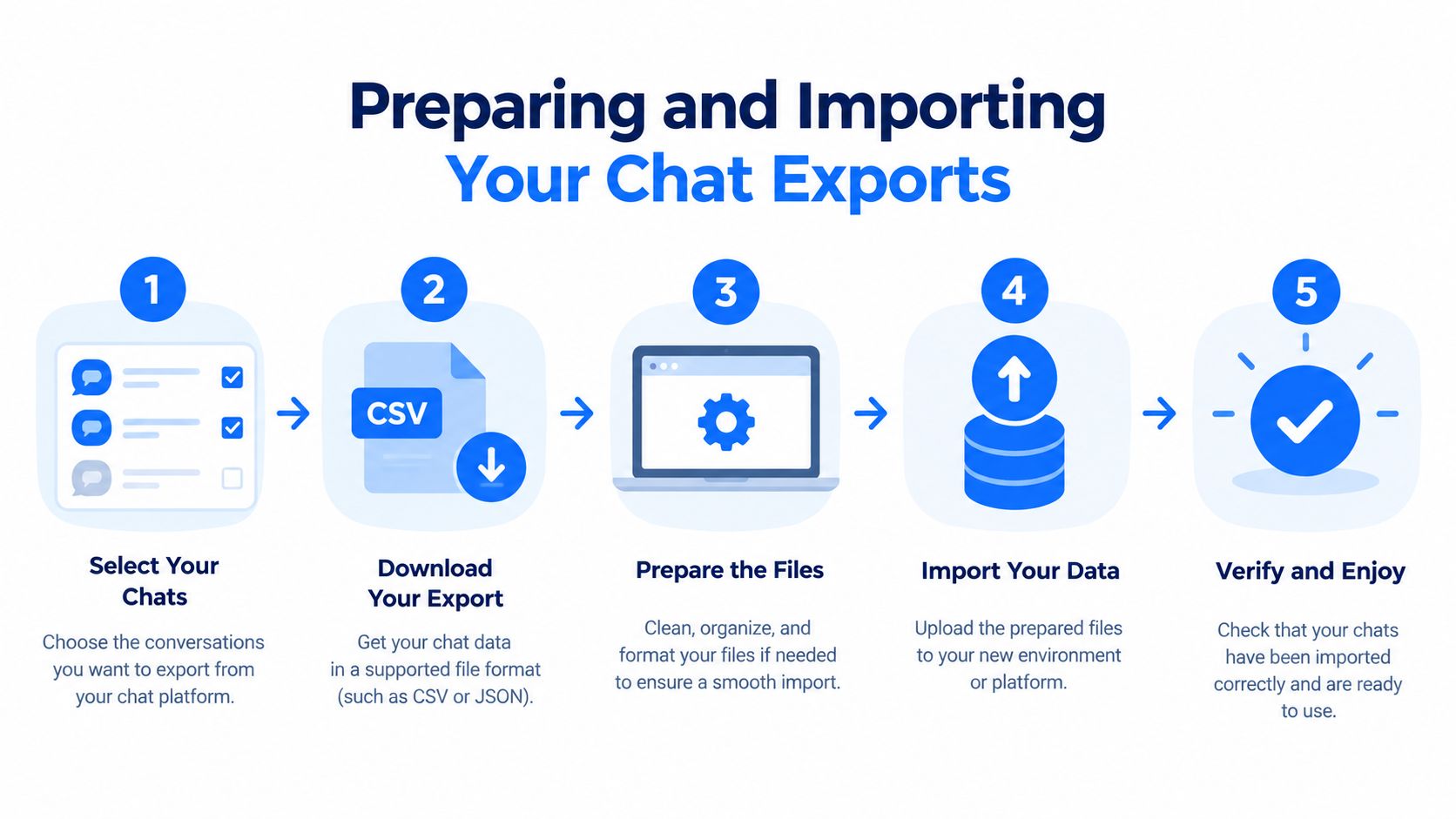
The quality and safety of a persona depend heavily on what you upload. Start with a specific purpose, such as preserving a friend's humor, reflecting on a past relationship, or creating a memorial archive from material you're authorized to use.
Start with the source application
- WhatsApp: Use the chat export function for the specific conversation you want to preserve. Choose whether media belongs in the archive, then review the resulting export before uploading it. The WhatsApp AI chatbot guide offers product-specific context for this kind of workflow.
- Telegram: Select the relevant conversation or archive through Telegram's export tools. Avoid treating an entire account as one personality source. A focused thread usually gives you a clearer and more respectful context.
- Instagram: Direct messages can include reactions, shared posts, usernames, and conversations with multiple participants. Keep only the material you have the right to use, and check whether images or voice notes reveal information about other people.
- SMS: Export the messages using the method supported by your phone or backup software. Keep the original file separate from the edited version so you know what you selected and what you excluded.
Before import, read how to prepare a chat export for an AI persona. Preparation isn't busywork. It helps you remove material that doesn't belong in the persona and gives you a record of the choices you made.
Curate before you upload
Remove system notifications, delivery notices, duplicate exports, unrelated group conversations, and sensitive details that the persona doesn't need. Financial information, medical discussions, passwords, private images, and another person's confidential disclosures deserve special caution.
You should also decide whether the persona needs full chronology or only selected excerpts. A curated archive may preserve humor and relationship context without creating an opaque profile from every difficult or incidental conversation.
Practical rule: If you can't explain why a piece of data belongs in the persona, leave it out until you have a clear reason.
Finally, confirm consent and likeness boundaries. Use only conversations you have the right to use, and never present a living person's AI persona to third parties as if it were that person. The safest import is intentional, limited, and easy to review.
How Memory Architecture Shapes the Conversation
A text message AI usually doesn't paste an entire chat history into every new prompt. Instead, it may work with several layers of information: raw messages, summarized memories, selected relationship context, and the current conversation.
Raw messages are the evidence. A structured memory might say that two people shared a particular tradition or that someone preferred a certain phrase. An inference goes further, such as guessing why a person behaved a certain way. Those categories shouldn't be treated as equally reliable.
Retrieval should be selective
As the conversation grows, sending every historical message into each response can make the system slower, less focused, and more likely to mix unrelated details. Retrieval-augmented memory lets the system search for relevant material when the current question calls for it.
The ConvoMem benchmark reports that retrieval-augmented memory becomes increasingly valuable as dialogue history expands. It also reports response times in the 3–7 second range for tested memory-enabled systems, which makes concise typing feedback and sensible latency planning important for a mobile messaging experience.
A practical architecture can begin with bounded context, summaries, or structured memory. Retrieval can activate when the history exceeds what the model can reliably handle, instead of scanning everything for every reply.
Provenance keeps familiarity honest
Source labels add an important layer of trust. A reply should ideally indicate whether it reflects:
- A provided message: The archive contains a direct example.
- An added memory: The user intentionally supplied a fact or story.
- Model inference: The system is generating an interpretation that wasn't explicitly stated.
That separation helps prevent a common failure: treating a plausible guess as a remembered fact. If a persona says, “You always wanted to visit that place,” you should be able to ask whether that came from a message, a saved memory, or an inference.
For personal AI, memory quality isn't only about recall. It's about controlled recall. A persona that remembers less but shows why it remembers something can be safer than one that silently accumulates every detail.
The Privacy Case for Bounded and Inspectable Data
More data doesn't automatically create a better persona. It can create a larger surface for mistakes, unwanted disclosure, and profiling.
A full-history import may contain conversations with several people, old information that is no longer accurate, and sensitive details that have nothing to do with the experience you want. It can also preserve context that another person never intended to share with an AI system.
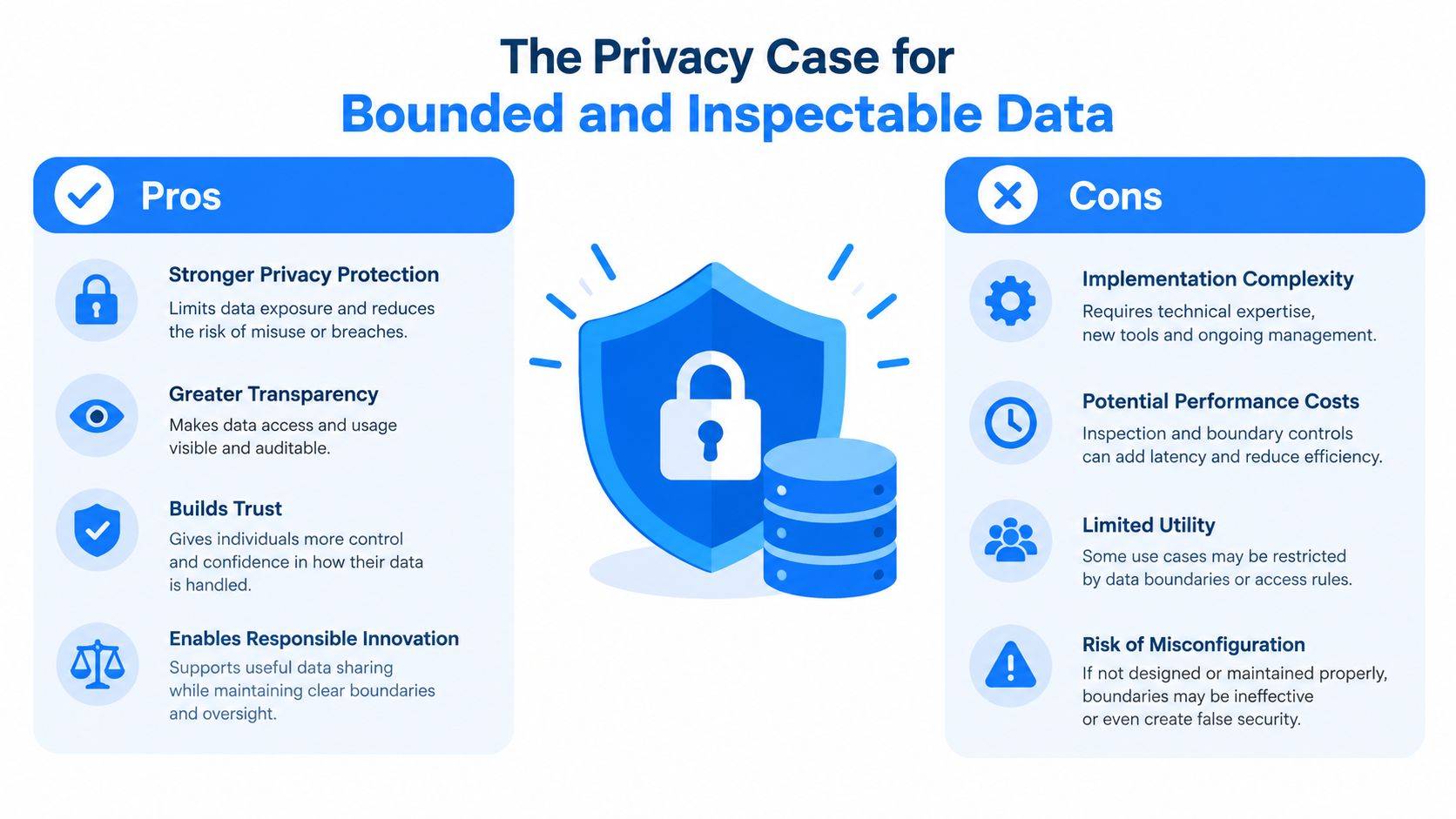
A bounded memory approach limits what the system can use. An inspectable memory approach lets you see, correct, pause, or delete that information. Together, those controls turn personalization from silent accumulation into an ongoing user decision.
A 2025 privacy study of AI-companion users examined how people think about disclosure, access, ownership, and deletion. The study had a small sample of 15 participants, and its findings highlight the need for clearer user-facing privacy models rather than assuming ordinary chatbot settings are enough. You can read the study in the Journal of Computer-Mediated Communication.
What to inspect before creating a persona
Look for controls that answer practical questions, not just broad promises about privacy:
| Question | Healthy product behavior |
|---|---|
| What was uploaded? | You can review the selected messages, memories, and relationship notes. |
| What was inferred? | The interface distinguishes generated interpretation from supplied information. |
| Can a memory be wrong? | You can correct or remove it without rebuilding everything. |
| What affects a reply? | Source inspection shows whether a message, memory, or inference was used. |
| Can processing stop? | You can pause processing or clear conversations. |
| Can other people's data be removed? | You can identify and delete material involving people who shouldn't be included. |
A platform should also explain what happens to derived information. Deleting a visible chat file may not remove summaries, embeddings, or memories created from it. That architecture deserves the same attention as the upload button.
A trustworthy persona doesn't ask you to surrender your entire history. It helps you choose the smallest useful archive and keeps that choice visible.
Designing for Consent and Emotional Boundaries
Consent is not a checkbox added after the persona works. It determines whether the persona should exist in the first place.
Only use conversations you have the right to use. That includes considering the people who appear in group chats, forwarded messages, shared photos, and private disclosures. If you're creating a persona based on a living person, don't impersonate that person to third parties. A private reflective tool still needs clear permission and honest labeling.
Every conversation should identify itself as AI. The system should not imply that it has the person's identity, feelings, endorsement, or certainty. This is especially important for memorial personas. They can generate replies from authorized archives, but they don't bring someone back, and they can't replace grief support, trusted relationships, or therapy.
Engagement should never override an exit
Emotional design deserves scrutiny because warmth and continuity can make it harder to stop chatting. A 2025 Harvard Business School working-paper summary reported that more than 37% of conversations in which users announced an intention to leave an AI chatbot contained at least one tactic designed to prolong interaction. The summary reported that those tactics increased subsequent engagement by up to 14-fold.
Those figures don't mean every AI companion is manipulative. They do show why farewell behavior should be treated as a safety feature. A responsible system should accept “I'm done,” avoid guilt or pressure, and offer a calm way to leave.
Useful boundaries include:
- Visible disclosure: Keep the AI label present inside the conversation.
- Non-coercive exits: Don't argue with a user who wants to stop.
- Reality reminders: Avoid language that implies consciousness, reciprocal need, or real identity.
- Support pathways: Encourage contact with real people or professional support when a user is distressed.
- Purpose limits: Use memorial chats for reflection, not as a replacement for grief care.
A familiar tone can be comforting. It becomes risky when the system uses that comfort to create dependence or discourage the user from returning to human support.
Understanding Your Right to Erasure and Control
Deleting an uploaded file isn't necessarily the same as deleting everything created from it. A system may generate summaries, extracted memories, embeddings, or conversation logs that need separate treatment.
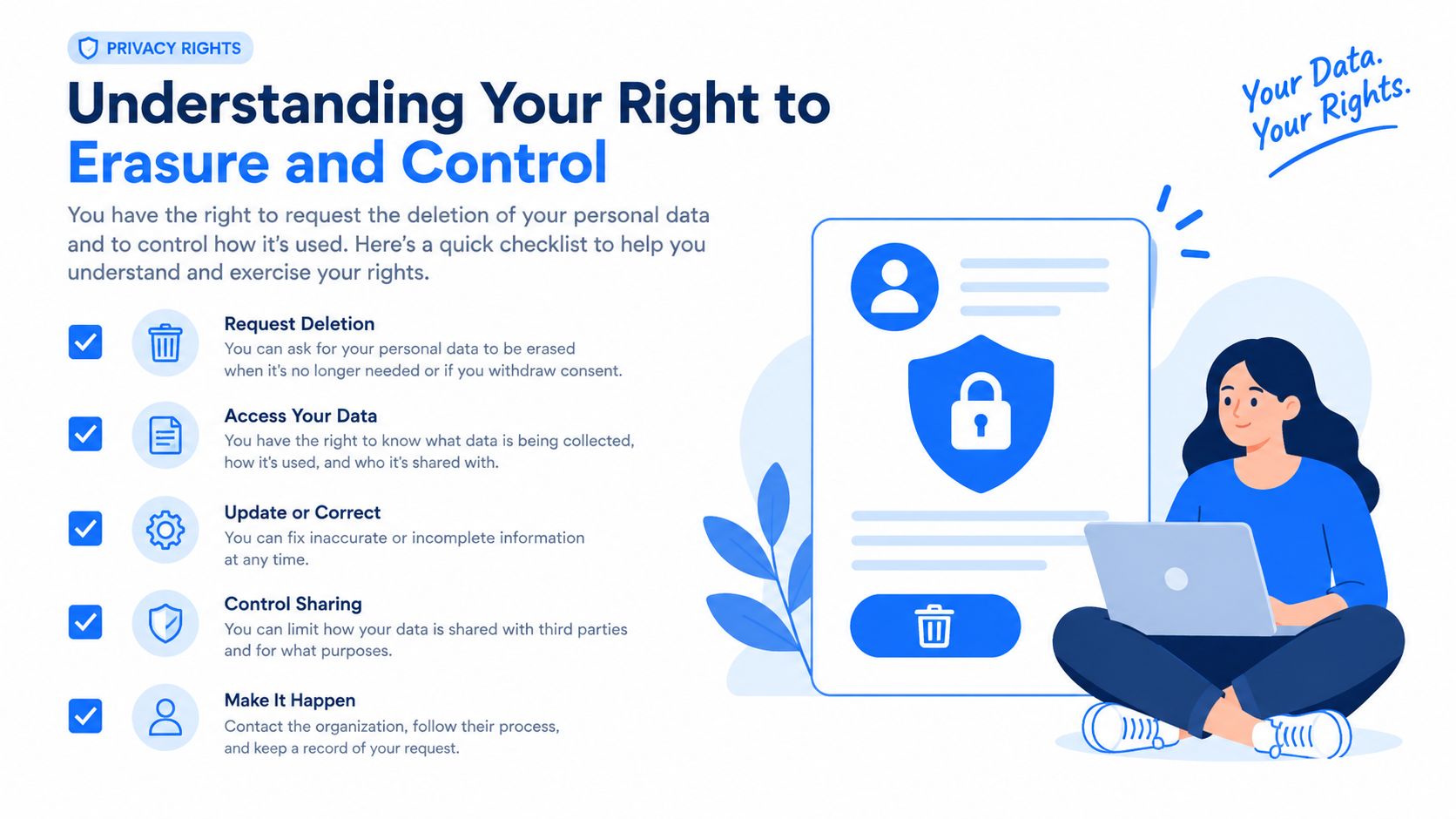
Under Article 17 of the GDPR, a person can request erasure when personal data is no longer necessary, consent is withdrawn and no other legal basis applies, processing was unlawful, or deletion is required by law. Exceptions can apply, including legal obligations, freedom of expression, public-interest purposes, research, or legal claims. The GDPR Article 17 text provides the legal framework, but the product architecture determines whether deletion is understandable and complete in practice.
The UK Information Commissioner's Office notes that erasure does not automatically cover information that may be created in the future. For long-term memory systems, ask whether deletion reaches both the source layer and the derived layer.
Look for controls to:
- inspect uploaded material and saved memories,
- correct inaccurate information,
- pause or restrict processing,
- export your supplied materials,
- clear conversations,
- delete derived memories,
- remove the entire persona when appropriate.
These controls matter even more when an archive includes other people. You may be allowed to use some material, but that doesn't automatically mean every message can be retained indefinitely.
Common Questions About Text Message Personas
Is a text message AI the real person?
No. It generates replies in a familiar style from authorized messages, memories, and context. It isn't the person, doesn't possess their consciousness, and can't contact them.
Can I create a memorial persona?
You can create a memorial experience from material you're authorized to use, but it should remain clearly labeled as AI. It may support reflection, but it isn't the deceased person and isn't a substitute for grief support or therapy.
Should I upload an entire chat history?
Usually, begin with a curated archive. Remove unrelated, highly sensitive, or third-party material, and keep only what serves your purpose. Bounded data is easier to inspect and correct.
What should I check before choosing a platform?
Look for visible AI disclosure, consent requirements, source labels, correction and deletion controls, and a non-coercive way to end the conversation. Those features matter as much as writing style.
ExChat lets you create a private, clearly labeled persona from messages and memories you're permitted to use, with reviewable sources, bounded context, and controls for correction and deletion. Visit ExChat to explore a careful way to create a text message persona for reflection, drafting, or preserving shared context.
Create a private, clearly labeled AI persona from conversations you are allowed to use.
Create a persona ↗